
City Council Passes ‘Healthy Homes’ Ordinance, Taking First Step Toward Proactive Rental Inspections
CHICAGO — The City Council on Wednesday passed an ordinance that will help the city create a system to proactively inspect rental housing to ensure safety and proper maintenance.
The Proactive Rental Inspection Working Group Ordinance will bring together representatives from the city’s health, housing, buildings and law departments alongside tenants, landlords and experts to form a working group within the next month, according to the Mayor’s Office and the ordinance.
City officials could not immediately be reached for details on how the landlords and tenants will be selected for the group.
Over the next six months, the working group will hold meetings across the city to hear from residents affected by unsafe housing. This feedback will help the group create a report with recommendations for how the city can set up a proactive inspection program and rental registry. Chicago has more than 614,000 rental units, according to the Mayor’s Office.
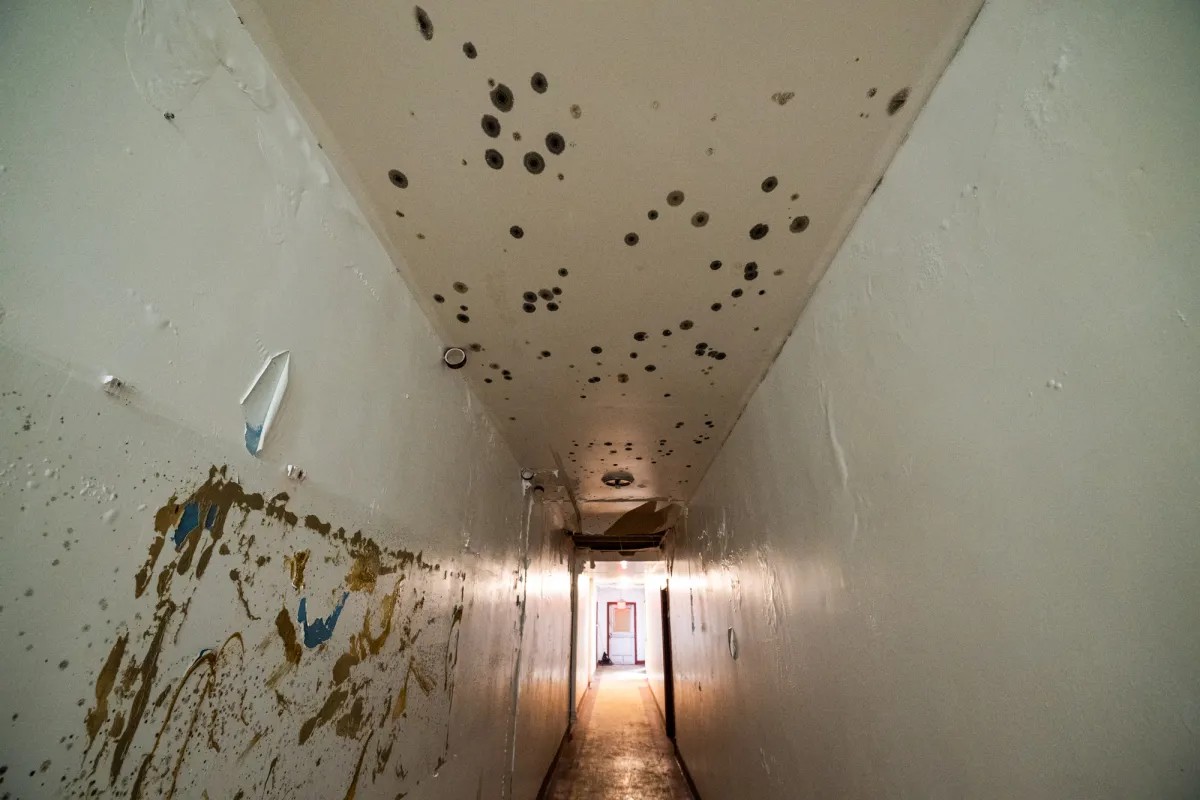
The recommendations will also guide the city in tracking housing conditions, improving enforcement protocols and helping prevent exposures to hazards such as carbon monoxide, mold and leaks, according to the city.
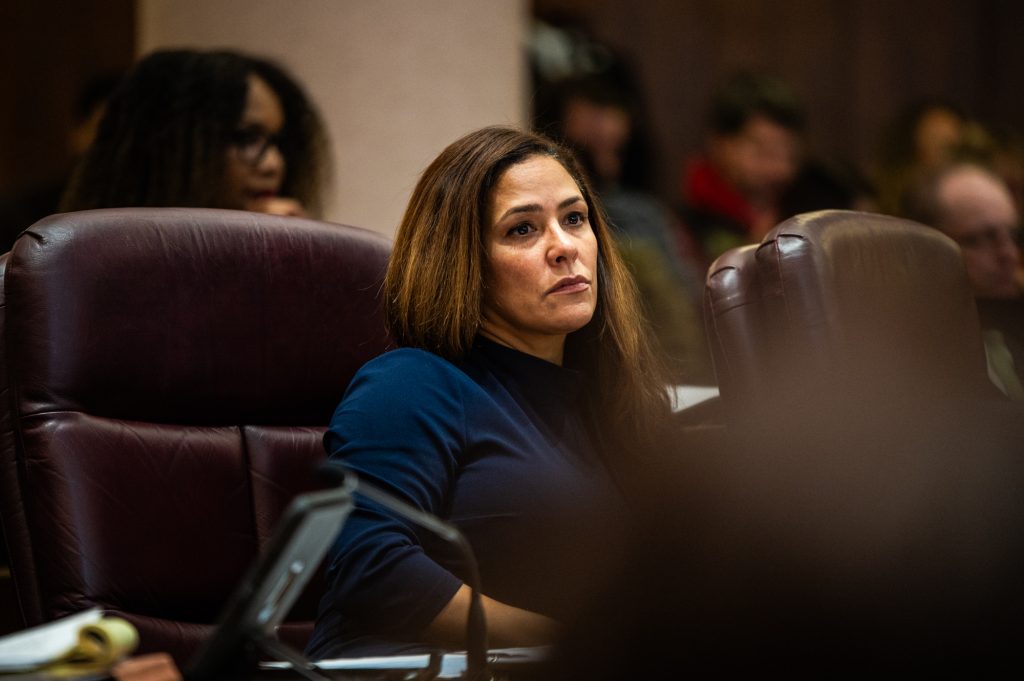
“What we want to do is to make sure that when people, particularly low-income people, rent an apartment, they have the peace of mind that that place that they’re providing for their family is not going to cause their kids to end up with asthma, lead poisoning, pests, mold,” Ald. Rossana Rodriguez-Sanchez (33rd) said Wednesday.
Rodriguez-Sanchez introduced the ordinance and described it as a measure to guarantee the safety of individual residents and families renting in the city.
A 2024 investigation by Injustice Watch showed how Chicago tenants regularly face building code violations, flooding, sewage backup, mold, insects, rodents, lead paint and dangerous structural defects, among other issues. The areas most affected are in neighborhoods that are over 80 percent Black, including much of the South and West sides.
“You have these properties that have been disinvested in for decades, where landlords know that the tenants won’t complain about the issues and, if the tenants do complain, you can just try and evict them,” said Sam Barth, a supervising attorney with the Law Center for Better Housing. The group is a part of a coalition that backed the ordinance.
The Metropolitan Tenants’ Organization operates a Tenants Rights Hotline; in 2025, nearly 10,000 calls were made to the hotline, with the 7th, 6th and 20th Wards leading with 733, 719 and 521 calls, respectively, according to data from the organization. These South Side, majority-Black wards, include all or portions of South Shore, Chatham, Auburn Gresham, Englewood and Woodlawn.
In comparison, the the 38th Ward, which includes Portage Park, had 32 calls to the hotline last year, the least of any ward. The 19th Ward, which includes Beverly, Morgan Park and Mount Greenwood, had 69 calls last year, the second-least number of cals.
The Garfield Park Community Council — another member of the coalition that backed the ordinance — offers housing support to address landlord and tenant issues, foreclosure prevention and eviction support.
“A lot of the houses on the West Side are deteriorating and a lot of issues revolve around conditions of the home,” said Ivan Ortiz, a West Garfield Park resident who serves as the organization’s housing counselor.
West Garfield Park residents live to an average age of 69, compared to 85 for people living in the Loop, according to a 2015 Virginia Commonwealth University report. Ortiz said these kinds of housing issues contribute to the life-expectancy gap.
“The history of the West Side and housing is so saddening [and] complicated,” Ortiz said. The ordinance “is meant to extend the life of our residents here. It’s definitely meant to at least have a fighting chance for them to stay in their home.”
Several cities across America have passed legislation to implement similar protections and inspection requirements, including Seattle, Denver and New Orleans.
“At the core of it all, what we are trying to do is protect people,” Rodriguez-Sanchez said last week at a Committee on Housing and Real Estate meeting. “Right now, inspections for rental units are not proactive. You have to wait until something happens — a child is sick. There is a consequence to the lack of maintenance to those units.”