
Chicago Opens Its 1st Food Pantry Inside A Public Library
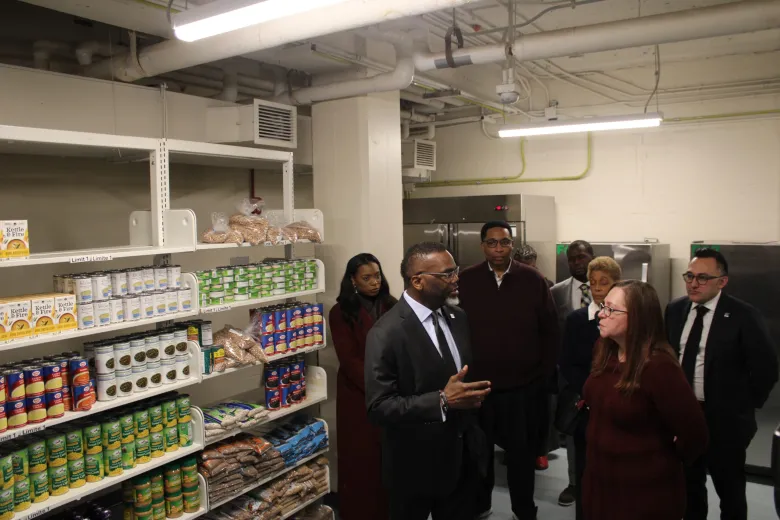
Legler Regional Library’s food pantry will be open Thursdays and Sundays, offering protein, produce, dairy and other food items, as well as household items and toiletries.
WEST GARFIELD PARK — A West Side library is entering the fight against hunger and food insecurity with the opening of a food pantry — the first of its kind in the city.
Legler Regional Library, 115 S. Pulaski Road, unveiled its expanded food pantry Thursday. A collaboration between the city, the Greater Chicago Food Depository and Chicago Public Library, the pantry is the first in the library system’s new Library-Based Food Access program.
Since soft-opening in July 2025, the food pantry has served around 600 households monthly in one of Chicago’s most food-insecure neighborhoods, according to the city. The pantry has grown since its soft launch.
“The pantry prioritizes dignity, consistency [and] reliable access to food,” said Chicago Public Library Commissioner Chris Brown at Thursday’s grand opening at Legler. “Not only are we expanding what a library can offer, but we’re exemplifying [Mayor Brandon Johnson’s] whole government approach to Chicago.”
The pantry is open 4-7 p.m. Thursdays and 1-4 p.m. Sundays.
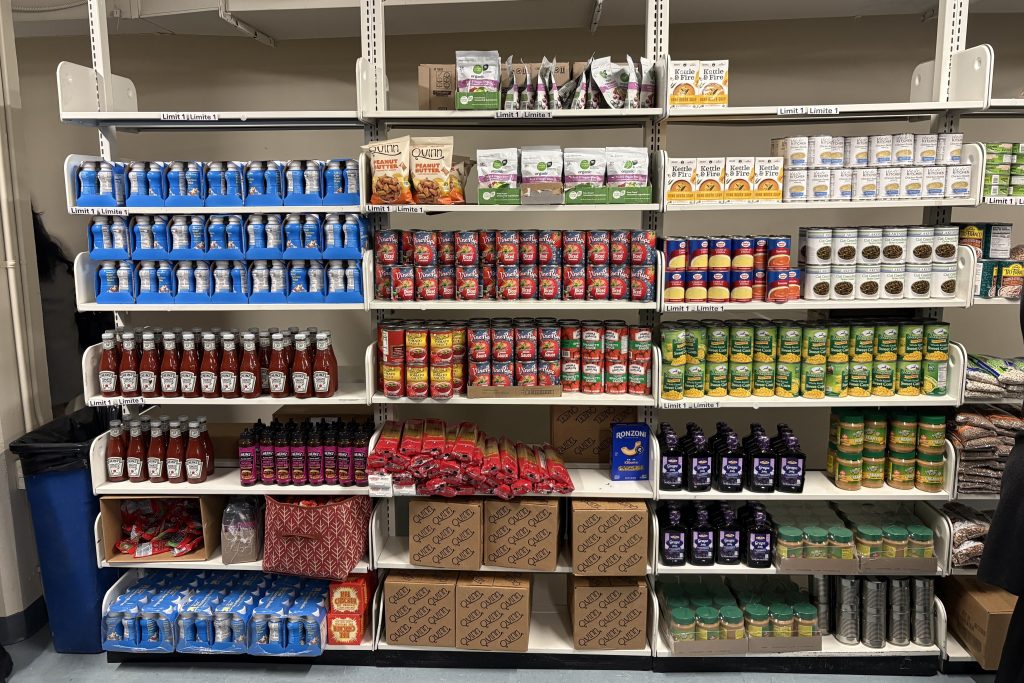
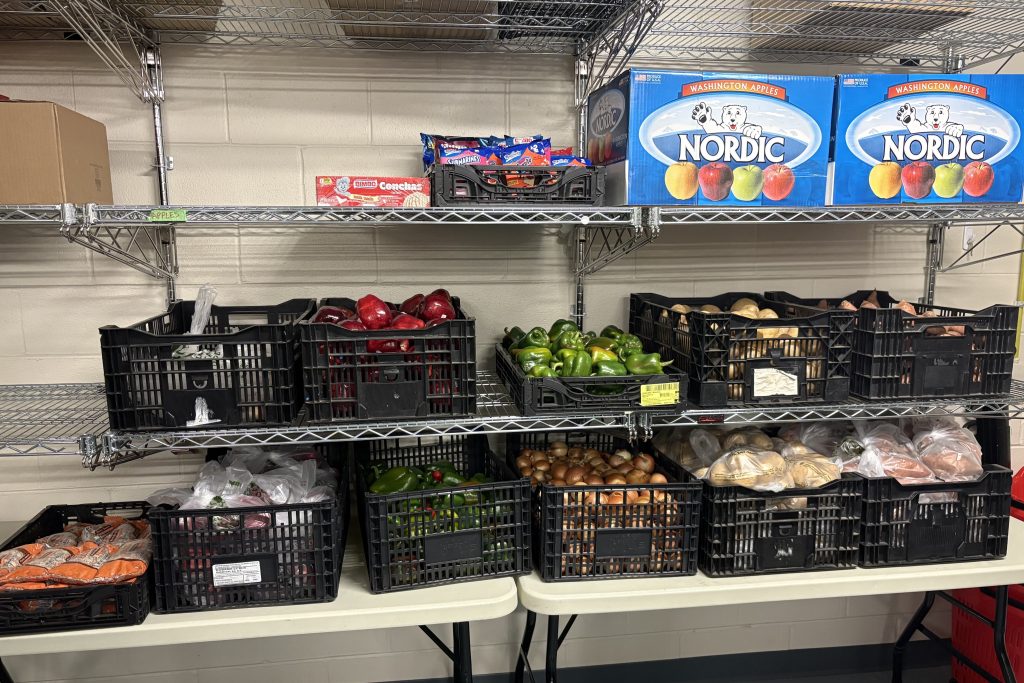
The pantry offers a rotating selection of protein, fresh fruits and vegetables, dairy, pantry staples and other essential foods, according to the city. The Greater Chicago Food Depository is partnering to help stock the pantry.
Pantry shelves also include prepackaged meals and household toiletries such as toothpaste and shampoo. During distribution hours, the pantry will also work with community partners to provide hygiene kits from the Chicago Police Department, tabling for children’s books from Dolly Parton’s Imagination Library and health education resources from Rush University Medical Center.
Legler’s food pantry is the second of its kind in the United States, following the Pratt Free Market at the Enoch Pratt Free Library in Baltimore, according to Chicago Public Library officials.
The West Garfield Park community where Legler resides is considered a food desert, with few walkable grocery stores and several notable closures of area grocers in recent years, such as the abrupt 2021 closure of an Aldi.
In 2024, the city selected a development to replace the Aldi that closed in Garfield Park. Finances for the project, which also has an apartment complex and restaurant, are currently being finalized, including a pending application with the Chicago Department of Housing’s Low Income Housing Tax Credit program. Recipients of the competitive tax credits will be selected in March, according to the city’s Department of Planning and Development. In the meantime, pop-up grocery stores have been offered in the area by community organizations such as the Garfield Park Community Council, Garfield Park Rite to Wellness Collaborative and West Side United.
“Bringing the full service food pantry into this neighborhood is what responsive government looks like,” Johnson said. “It meets people where they are. It supports healthier outcomes for children, seniors and working families. This partnership is a clear statement of our commitment to the West Side and to the people who have always made this community strong.”
In addition to the food pantry, Legler offers mental health resources, youth programming, artist-in-residence and lifelong learning opportunities, according to the city.